All images © Felipe de Ávila Franco. The use of any image from this site is prohibited unless prior written permission from the artist is obtained.
All images © Felipe de Ávila Franco. The use of any image from this site is prohibited unless prior written permission from the artist is obtained.
Supported by:
Supported by:

Installation, 2010 Asphalt collected pieces Variable dimensions

Sculpture, 2010 Bricks, mirrors, iron tap, water, and electro-mechanics 60x50x40cm

Sculpture, 2010 Wood, aluminum, brass, galvanized and bricks 180x180x50cm

Sculpture, 2010 Chemically aged steel sheet 65x80cm

Installation, 2010 Bricks, crushed bricks, wood frame and glass 120x180cm
Installation, 2010 Asphalt collected pieces Variable dimensions
Sculpture, 2010 Bricks, mirrors, iron tap, water, and electro-mechanics 60x50x40cm
Sculpture, 2010 Wood, aluminum, brass, galvanized and bricks 180x180x50cm
Sculpture, 2010 Chemically aged steel sheet 65x80cm
Installation, 2010 Bricks, crushed bricks, wood frame and glass 120x180cm

Provoked Archaeologies #2
Installation, 2019
Excavated soil in the Amazonia rainforest, branches, and sisal rope
Variable Measures

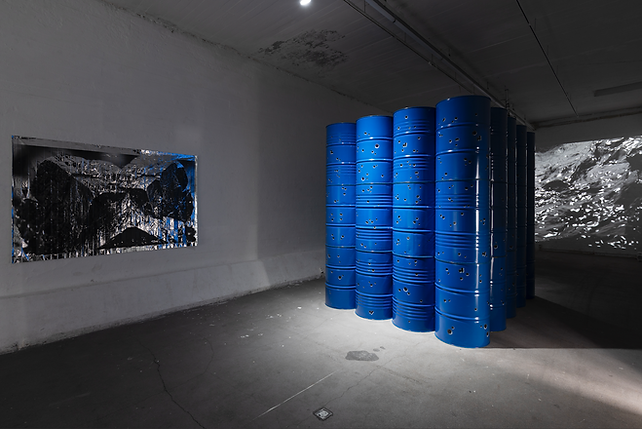
Carbon Derrocacy, 2026
Exhibition view at Forum Box Gallery, Helsinki
Image curtesy of Forum Box / Anna Autio
Carbon Derrocacy, 2026
Carbon Derrocacy examines the enduring influence of fossil-fuel systems on contemporary life. Through sculpture, installation, and moving image, the exhibition explores how extractive processes continue to shape global infrastructures, geopolitical relations, and modes of perception.
Working with industrial materials, algorithmic imagery, and constructed environments, the project traces the networks connecting natural resources, technological systems, and visual culture. Rather than framing extraction as distant or invisible, the exhibition reveals its continuous presence within the material and sensory conditions of the present.
The title builds on and distorts the title of Timothy Mitchell’s book Carbon Democracy, which examines the historical relationship between democratic systems and fossil-fuel infrastructures. By transforming “democracy” into “derrocacy,” the exhibition introduces a linguistic fracture that evokes political erosion, instability, and systemic decline. The invented term reflects a condition that feels increasingly difficult to define, situating the exhibition within broader questions surrounding ecological crisis, power, and governance.
Supported by:


Images curtesy of Forum Box / Anna Autio / Felipe de Ávila Franco